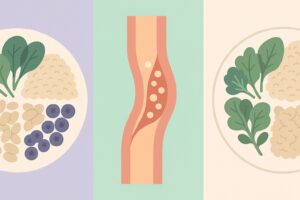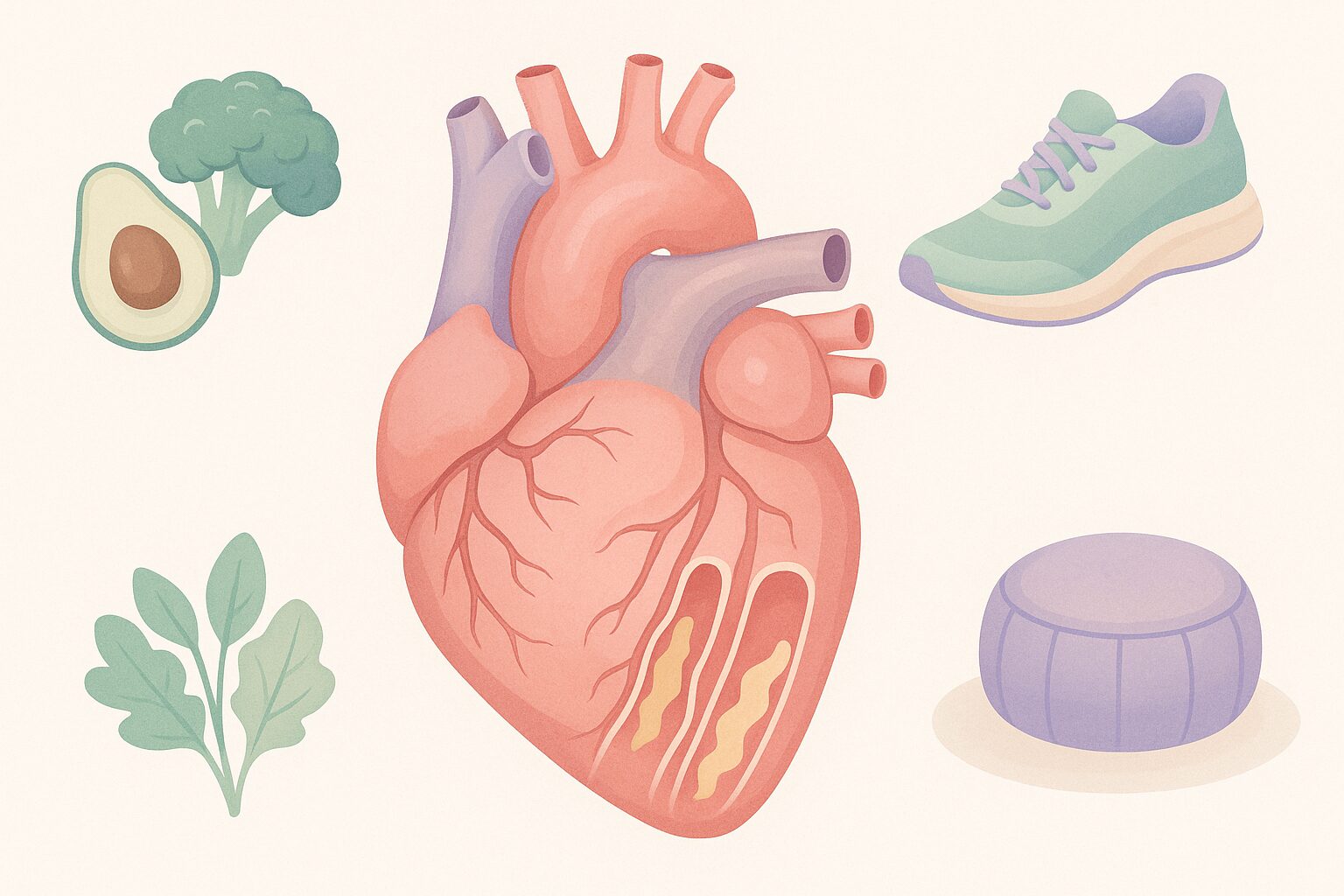
If a cardiologist tells you heart disease is a one-way street, the science says otherwise — with caveats. Multiple peer-reviewed trials have documented measurable plaque regression in patients who combine an aggressive plant-forward diet with exercise, stress management, and (in most cases) statins. The honest 2026 answer is that yes, you can shrink existing arterial plaque and dramatically reduce future cardiac events, but “reverse” rarely means erasing every lesion in your coronaries.
What “reversal” actually means on an angiogram
In the cardiology literature, reversal is measured in three ways: percent diameter stenosis (the narrowest point of the artery), total atheroma volume by intravascular ultrasound (IVUS), and non-calcified plaque burden on CT angiography. The Ornish Lifestyle Heart Trial used quantitative coronary angiography and found an average 4.5% reduction in stenosis at 1 year and 7.9% at 5 years in the intervention group, while the control group worsened by 5.4% and 27.7% respectively.
Calcified plaque — the hard, crunchy stuff — almost never disappears once it has formed. Soft plaque, the lipid-rich and inflammation-driven lesions that actually rupture and cause heart attacks, is the part that shrinks. This is good news, because vulnerable plaque is what kills you, not stable calcium.
The four interventions that move the needle
| Intervention | LDL drop | Plaque effect | Evidence strength |
|---|---|---|---|
| Very-low-fat plant diet (Ornish/Esselstyn) | 30–40% | Regression | Strong (RCT + cohort) |
| High-intensity statin (rosuvastatin 40mg) | 45–55% | Regression (REVERSAL, ASTEROID) | Strong (RCT) |
| Mediterranean + exercise | 10–20% | Stabilization | Strong (PREDIMED) |
| Stress management (yoga, meditation) | 0–5% | Adjunct, lowers event risk | Moderate |
The honest caveats
- Regression requires sustained LDL below 70 mg/dL — most patients need both diet and medication to get there.
- Patients with familial hypercholesterolemia (FH) typically cannot reach goal on diet alone.
- Calcified stenoses > 70% may still need a stent or bypass regardless of lifestyle progress.
- Quitting smoking is non-negotiable — nicotine reverses every other gain.
- The first 90 days require monitoring: lipid panel, hs-CRP, blood pressure, A1c.
Where to start this week
The two most-cited protocols are detailed in our deep-dive on the Ornish and Esselstyn protocols, and a practical 30-day onboarding is laid out in our 30-day reversal action plan. Both pair with the same food list: leafy greens, beans, whole grains, berries, nuts — no oil, no meat, no dairy in the strictest versions.
Frequently Asked Questions
Can you reverse heart disease without medication?
Some patients with mild-to-moderate disease and excellent baseline metabolic health can regress plaque on diet and exercise alone, but the published reversal trials all included statins in the medication arm for most participants. The honest position: lifestyle does the heavy lifting on inflammation and endothelial function; statins finish the LDL drop. Talk to your cardiologist before stopping any prescribed medication.
How long until I see results?
Endothelial function improves within 2–6 weeks. LDL drops measurably at 4–6 weeks. Symptomatic improvement in angina is often reported by week 8. Angiographic plaque regression is measurable at 12 months and clearly visible by year 2–3.
Is heart disease reversal real or marketing?
It is real and peer-reviewed. The skepticism in mainstream cardiology comes from the difficulty of achieving the required lifestyle adherence outside a research setting — not from doubt that the biology works.
Sources & Further Reading
- Ornish D. — Intensive lifestyle changes for reversal of coronary heart disease (JAMA 1998)
- Esselstyn CB. — A way to reverse CAD (J Family Practice 2014)
- EVAPORATE trial — Icosapent ethyl and plaque regression (Eur Heart J 2020)
- American Heart Association — Atherosclerosis