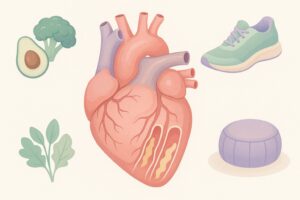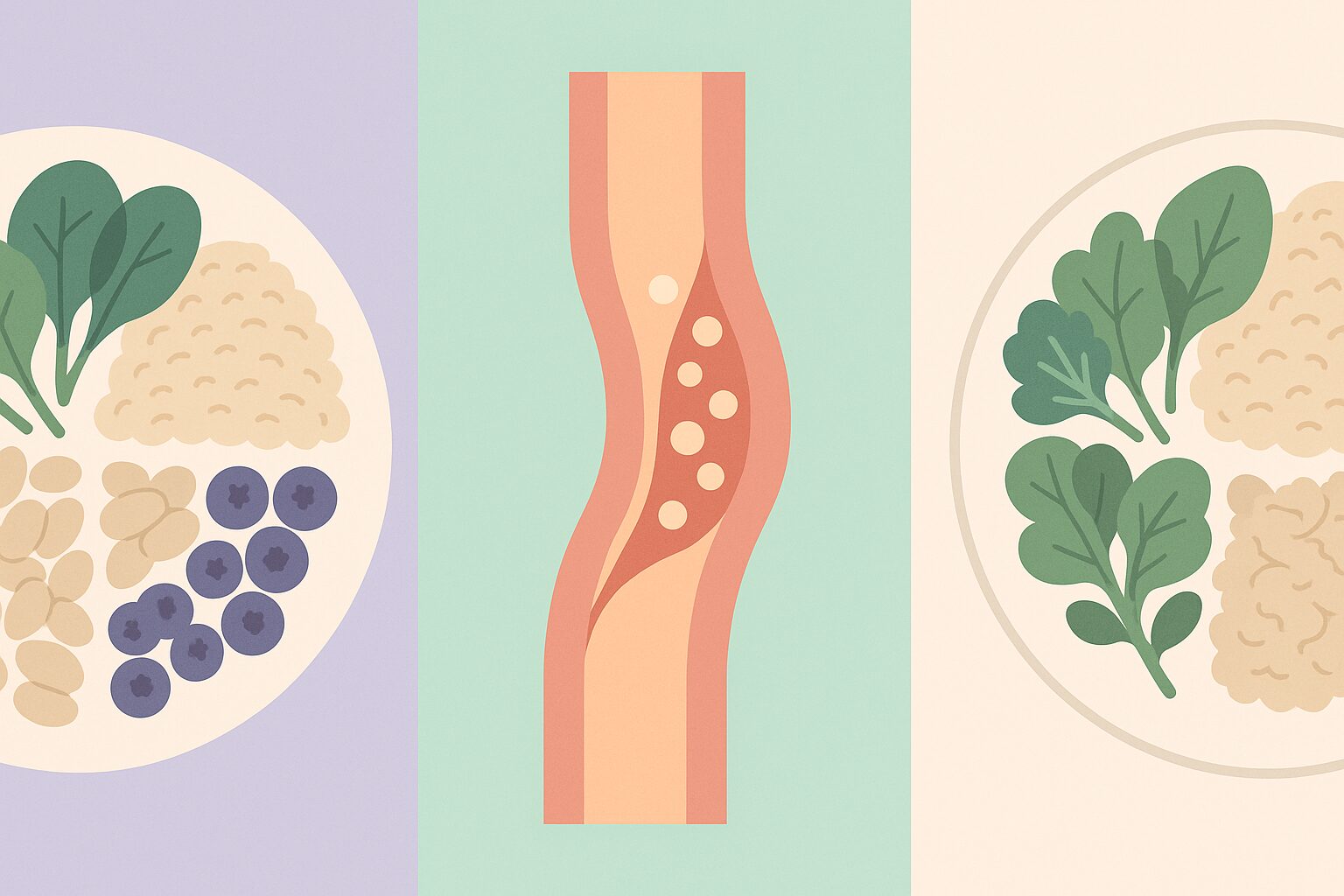
Two American physicians spent four decades proving that coronary plaque can shrink. Dean Ornish (UCSF) ran the first randomized angiographic reversal trial in 1990; Caldwell Esselstyn (Cleveland Clinic) followed 198 self-selected patients on a stricter plant-based protocol and documented zero major cardiac events in adherent patients over 12 years. Their diets differ in nuance — the underlying mechanism is identical: drop dietary cholesterol and saturated fat to near zero, raise nitric oxide, calm endothelial inflammation.
Side-by-side comparison
| Element | Ornish Reversal | Esselstyn |
|---|---|---|
| Fat ceiling | 10% of calories | Whole-food fat only, no added oils |
| Animal products | Egg whites + non-fat dairy allowed | None — zero meat/dairy/eggs |
| Added oils | Trace allowed | Banned including olive/coconut |
| Nuts & avocado | Allowed in moderation | Restricted for symptomatic CAD |
| Stress management | Required (1 hr/day yoga + meditation) | Encouraged |
| Group support | Required (weekly) | Optional |
| Insurance coverage | Medicare-approved program | Not reimbursed |
Why no added oil — even “healthy” olive oil?
Esselstyn’s argument: a single high-fat meal — even from olive oil — causes measurable endothelial dysfunction lasting 5–6 hours. Brachial artery flow-mediated dilation studies show a 31% drop after a high-fat meal regardless of fat source. For someone with already-damaged endothelium (i.e. existing CAD), that recurring insult is what prevents healing. The Mediterranean diet wins on population outcomes because olive oil displaces butter and lard; it does not actively heal arteries the way an oil-free whole-food plant diet does.
The Esselstyn plate (what a day actually looks like)
- Breakfast: steel-cut oats with berries, ground flax, plant milk — no oil
- Lunch: huge salad (greens + beans + whole grain + balsamic) + sweet potato
- Dinner: brown rice, broccoli, kale, lentil stew — no oil
- Snacks: fruit, raw vegetables, hummus made without tahini/oil
- Beverages: water, herbal tea, coffee (black), no alcohol if symptomatic
The Ornish stress component is not optional
Ornish data shows that patients who skipped the stress-management pillar had significantly worse 5-year angiographic outcomes despite equivalent diet adherence. Cortisol drives endothelial dysfunction and platelet aggregation independently of LDL. One hour per day, divided between gentle yoga, breathwork, and meditation, is the prescribed dose. See our deep-dive on stress, cortisol, and heart disease for the mechanism.
Who should NOT attempt strict reversal alone
- Anyone with familial hypercholesterolemia (lifestyle insufficient — statin required)
- Recent MI or unstable angina (work with cardiac rehab team)
- Type 1 diabetes (carb load needs insulin recalibration)
- Patients on warfarin (vitamin K spike from greens needs INR monitoring)
Frequently Asked Questions
Can I do Ornish or Esselstyn without giving up coffee?
Yes. Both protocols allow black coffee in moderation (1–2 cups/day). No cream, no oat-milk creamer with added oils. Green tea is encouraged for its EGCG antioxidant load.
Is olive oil really banned on Esselstyn?
On the strict Esselstyn protocol for symptomatic CAD, yes. He argues every fat insult prolongs endothelial healing. For prevention (no diagnosed disease) extra-virgin olive oil in moderation is fine.
Which is easier to stick with?
Ornish is generally rated more sustainable because it allows trace fats and small amounts of egg whites/non-fat dairy. Esselstyn has higher reversal rates among the adherent minority but lower adherence rates overall.
Sources & Further Reading
- Ornish Lifestyle Heart Trial — 5-year follow-up (JAMA 1998)
- Esselstyn CB — A way to reverse CAD (J Family Practice 2014)
- Endothelial dysfunction after high-fat meals (Vogel 1997)
- AHA — Plant-based diets and CV health (Circulation 2019)